


➔ 

filtre:
resource
2026
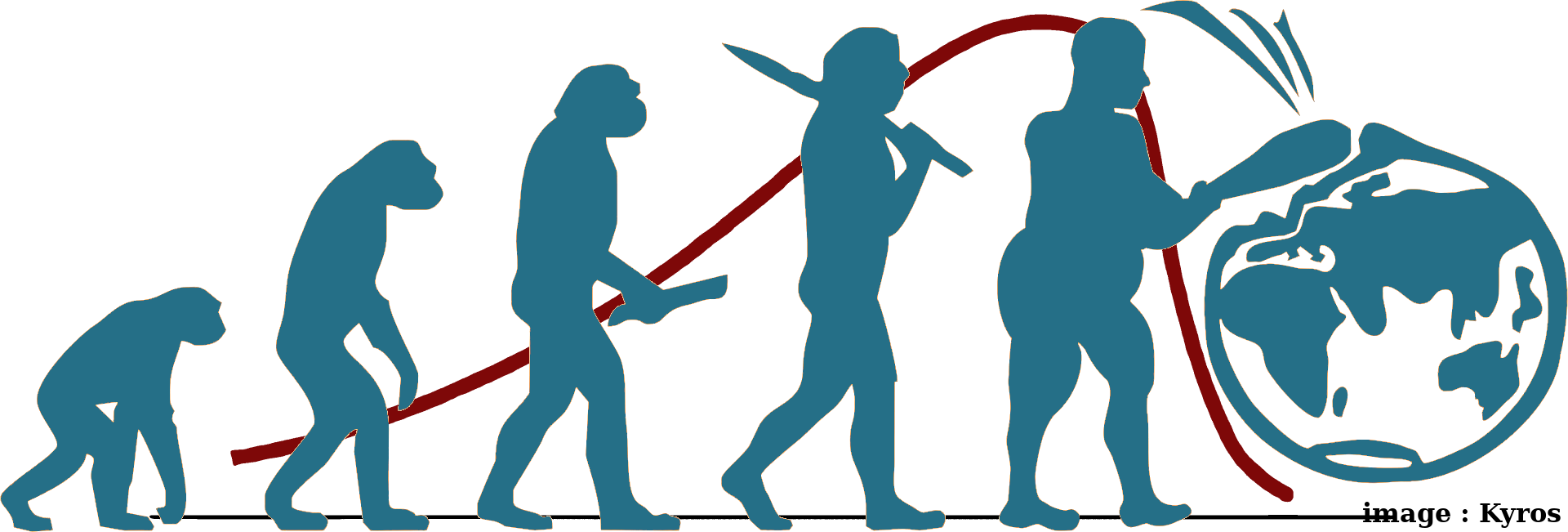
Today, we are close to the critical moment when conventional economic growth becomes impossible on a finite planet, constrained by two parallel factors: resource depletion and pollution. Tthe depletion of fossil fuels and other mineral commodities is placing heavy constraints on both industrial and agricultural production. We are not running out of anything yet, but the cost of extraction is increasing, just as the damage that extraction causes to the ecosystem. On the other side, pollution is appearing in more than one form. Chemical pollution is growing in terms of heavy metals, endocrine-disruptors, and other poisoning substances, while climate change can be seen as another form of pollution generated by the excess of CO2 in the atmosphere.
The decline in the health of nature around the world poses a threat to the UK's security and prosperity, an intelligence committee has concluded in a long-awaited report. The document warns of "cascading risks" from the degradation of some of the planet's most important ecosystems, including conflict, migration and increased competition for resources.
“Water crisis” has become the default label for almost any episode of water stress, from short-lived droughts to decades-long overuse of rivers and aquifers. Yet in many regions of the world, water problems no longer resemble a crisis in the conventional sense. They represent a post-crisis failure state in which human–water systems have exceeded their hydrological carrying capacities, and societies have spent beyond their sustainable hydrological budgets for so long that critical water assets are depleted, some ecosystem damages are irreversible on human time scales, and a return to “normal” is infeasible even with prohibitive economic, social, and environmental costs.
2025
Neonicotinoid insecticides are a major driver of pollinator decline. Due to their persistence and mobility in soil, they can contaminate non-target vegetation through runoff or dust, reaching pollinator resources. However, predicting soil contamination is challenging, especially where pesticide use data is lacking. This study assessed the potential of using proxies such as cropping history and landscape structure to predict neonicotinoid content in soils. We analyzed seven neonicotinoids in 86 sites in agricultural landscapes of Belgium.
The World Sufficiency Lab is a non-profit and independent think-to-do tank, whose mission is to serve as the primary resource and voice for sufficiency worldwide.
Much attention today focuses on uncertainties affecting the future evolution of oil and natural gas demand, with less consideration given to how the supply picture could develop. However, understanding decline rates – the annual rate at which production declines from existing oil and gas fields – is crucial for assessing the outlook for oil and gas supply and, by extension, for market balances. The International Energy Agency (IEA) has long examined this issue, and a detailed understanding of decline rates is at the heart of IEA modelling and analysis, underpinning the insights provided by the scenarios in the World Energy Outlook. This new report – based on analysis of the production records of around 15 000 oil and gas fields around the world – explores the implications of accelerating decline rates, growing reliance on unconventional resources, and evolving project development patterns for the global oil and gas supply landscape, for energy security and for investment. It also provides regional insights
Le siège sera situé au Canada mais l'entité sera cotée à la Bourse de Londres.
It is said that George W. Bush Jr. decided to invade Iraq in 2003 because he had read some papers on oil depletion by the Association for the Study of Peak Oil (ASPO). Of course, it may be just a legend, but I don’t see it as impossible, and perhaps not even improbable. Politicians make decisions on the basis of vague ideas, often on the spur of the moment, and in many cases making terrible mistakes. But they normally understand some of the critical elements that keep alive the system. For the US, the critical resource was, and still is, crude oil. So, it is possible that Bush thought that it was necessary to compensate for the decline of the US oil production by seizing the Iraqi resources. That didn’t necessarily imply to start a war, just like filling the tank of your car doesn’t imply shooting dead the service station operator. But that’s the way some people’s minds work.
Climate change will fuel contests—and maybe wars—for land and resources.
2024
Over 2.5 billion people depend on aquifers for fresh water, but rising seas and climate change are pushing saltwater into these crucial reserves.

Listing généré avec