Le climat est la distribution statistique des conditions de l’atmosphère terrestre dans une région donnée pendant une période donnée. L’étude du climat est la climatologie. Elle se distingue de la météorologie qui désigne l’étude du temps dans l’atmosphère à court terme et dans des zones ponctuelles. source : wikipedia
COPERNICUS – Mises à jour
Les champs auteur(e)s & mots-clés sont cliquables. Pour revenir à la page, utilisez le bouton refresh ci-dessous.



filtre:
industry
We propose a new paradigm, as toxicology currently lacks the proper perspective. From the 1950s to the 1970s, at least one-third of all toxicological testing in the United States, including for chemicals and drugs, was misleading scientists, and this worldwide issue persists today. Moreover, petroleum-based waste and heavy metals have been discovered in pesticide and plasticizer formulations. These contaminations have now reached all forms of life. Widespread exposure to chemical mixtures promotes health and environmental risks. We discovered that pesticides have never undergone long-term testing on mammals in their full commercial formulations by regulatory authorities or the pesticide industry; instead, only their declared active ingredients have been assessed, contrary to environmental law recommendations. The ingredients of these formulations are not fully disclosed, yet the formulations are in general at least 1000 times more toxic at low environmentally relevant doses than the active ingredients alone u
Sophisticated global networks are infiltrating journals to publish fake papers
Morgan Stanley, JPMorgan and an international banking group have quietly concluded that climate change will likely exceed the Paris Agreement’s 2 degree goal.Top Wall Street institutions are preparing for a severe future of global warming that blows past the temperature limits agreed to by more than 190 nations a decade ago, industry documents show.
Focus on capital discipline, increasing customer centricity, and investments in new technologies may help companies navigate economic, geopolitical, and regulatory uncertainties in 2025
Japan’s whaling practices are in the spotlight following the arrest of activist Paul Watson. Are they a deeply rooted cultural tradition or a lucrative economic activity?
The auto industry is making too many cars powered by fossil fuels.
Biotech firms are using climate goals opportunistically in an attempt to force through the deregulation of genetically modified crops.
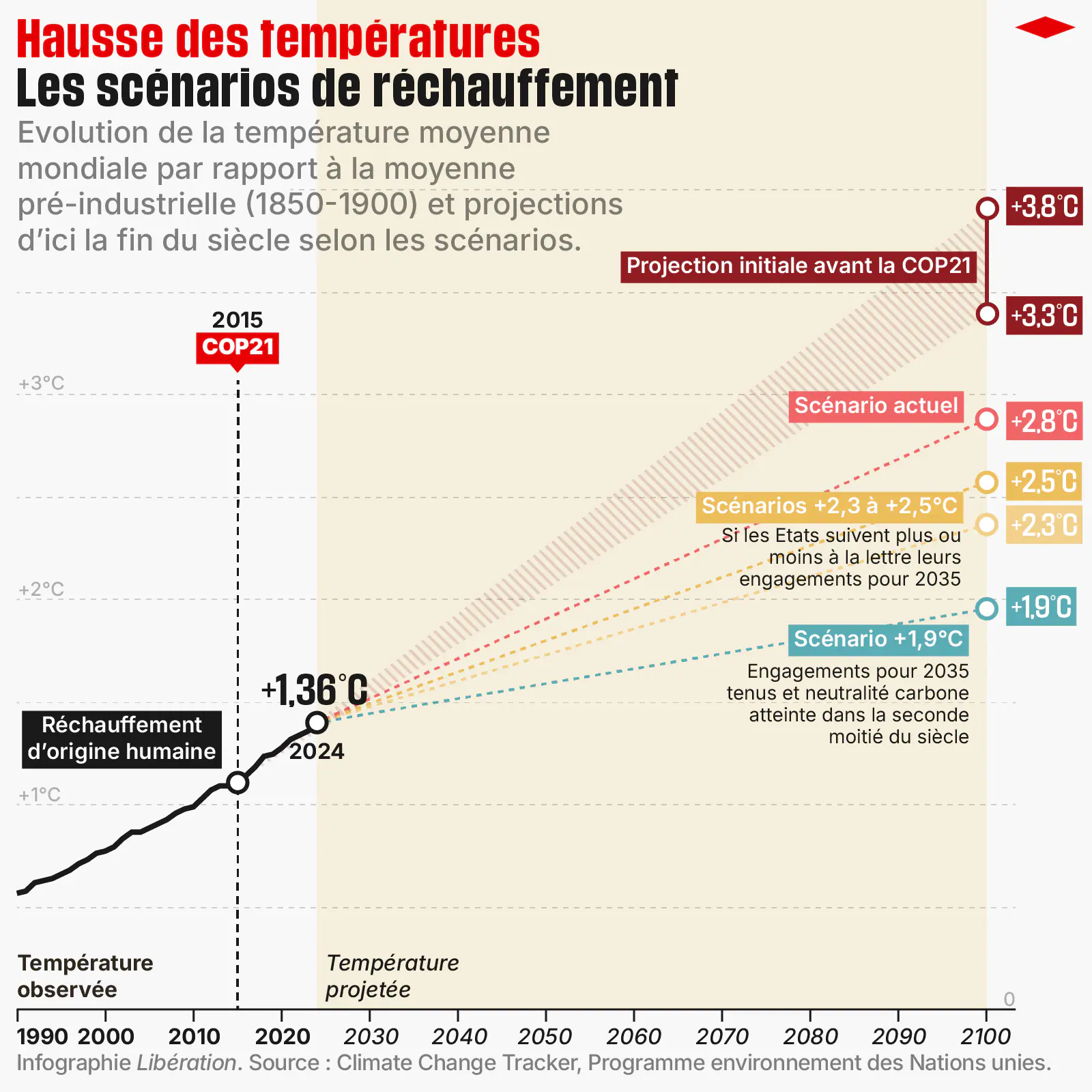
Forecast downturn still ‘nowhere near steep enough’ to limit temperature rise to 1.5C, says watchdog
EN
Unprecedented levels of damage from storms this year is upending US towns and the insurance industry
(09/08) - MICHELLE CHAPMANWaves of severe thunderstorms in the U.S. during the first half of this year led to $34 billion in insured losses, an unprecedented level of financial damage in such a short time as climate change contributes to the frequency and severity of violent meteorological events. The reinsurer Swiss Re Group said Wednesday that damages from convective storms in the U.S., which can come with hail, lightning, heavy rain and high winds, accounted for nearly 70% of the $50 billion in global catastrophic damages so far this year. The storms in the U.S. were so severe, there were 10 that resulted in damages of $1 billion or more, almost double the average over the last decade.
Hundreds of students and graduates vow not to work for ‘climate wreckers that insure those responsible for the climate crisis’
Recent leaks from oil sands tailings ponds have contaminated water, sowing mistrust among local First Nations people
Guardian analysis of data in light of Ohio train derailment shows accidental releases are happening consistently
Thirty years ago, a bold plan was cooked up to spread doubt and persuade the public that climate change was not a problem. The little-known meeting - between some of America's biggest industrial players and a PR genius - forged a devastatingly successful strategy that endured for years, and the consequences of which are all around us.
Allhoff-Cramer claims that the automaker is partly responsible for the impact of global heating on the farming industry and wants Volkswagen to stop making combustion engines by 2030. "Farmers are already being hit harder and faster by climate change than expected," says Allhoff-Cramer.
As head of state-owned oil firm Rosneft, oligarch commands central place in the economy
During the last shale oil boom when producers were racing to see who could pump the most the fastest, some experts warned that shale oil had a flaw that would come to haunt these producers: wells were quick to start producing but also quick to deplete. Now, industry data suggests that the depletion is advancing. The Wall Street Journal’s Colin Eaton cited reserve inventory data from the shale patch in a recent analysis that pointed to a stable decline that may be irreversible. Eaton also quoted industry executives as making plans for such an irreversible development.
In January of 2019, Chase Lochmiller and Cully Cavness, recently reunited prep school pals from Denver, drove out to the snow-covered plains of Wyoming to bring a piece of tech culture to the American heartland. Trembling in -20F (-29C) temperatures, they wired up a prototype of their brainchild: a machine that harnesses the “waste gas” from oil rigs to power mining for cryptocurrency.
The fossil fuel industry benefits from subsidies of $11m every minute, according to analysis by the International Monetary Fund.
In the wake of the Supreme Court’s ruling against a seabed mining consent today, there is nothing standing in the way of the Government moving to ban the experimental industry from New Zealand waters, said Kiwis Against Seabed Mining.
The recent spike in natural gas prices has closed many plants that make fertiliser in the UK – sending a shockwave through lots of other industries.
There are several ways to remove carbon from the atmosphere. One is called bioenergy with carbon capture and storage, or Beccs. Here, vast acres of fast-growing plants are grown and then harvested and burned to generate electricity or make biofuel for vehicles.
Twenty livestock companies are responsible for more greenhouse gas emissions than either Germany, Britain or France – and are receiving billions of dollars in financial backing to do so, according to a new report by environmental campaigners. Raising livestock contributes significantly to carbon emissions, with animal agriculture accounting for 14.5% of the world’s greenhouse gas emissions.
Climate risk, a growing focus for environment, social and governance-minded investors, has morphed into an urgent issue for insurers as wildfires ravage the U.S. and Europe and natural disasters destroy property and cost lives worldwide.
The sixth assessment report from the Intergovernmental Panel on Climate Change is no ordinary publication. Its 4,000 pages were written by hundreds of independent scientists from 66 countries.
An astute journalist I know once described carbon capture and storage (CCS) as a “delay-and-fail strategy” devised by the fossil fuel industry. The industry’s ploy was utterly obvious to him: Promise to perfect and deploy CCS at some vague point in the future. By the time people catch on that CCS won’t work, the fossil fuel industry will have successfully extended the time it has operated without onerous regulation for another couple of decades.
Growing global meat consumption threatens to derail the Paris Agreement, but that hasn’t stopped the meat industry insisting it is part of the solution to climate change.
Fossil fuel companies lied for decades about climate change, and humanity is paying the price. Shouldn’t those lies be central to the public narrative?
After a century of wielding extraordinary economic and political power, America’s petroleum giants face a reckoning for driving the greatest existential threat of our lifetimes. An unprecedented wave of lawsuits, filed by cities and states across the US, aim to hold the oil and gas industry to account for the environmental devastation caused by fossil fuels – and covering up what they knew along the way.
Maine just became the first state to require the divestment of its state pension system from the fossil fuel industry by 2026. Though several other states and cities have taken measures towards divestment in recent years, Maine is the first state to require divestment by law.
The potent greenhouse gas methane is spewing out of natural gas infrastructure across the European Union because of leaks and venting. Using an infrared camera, non-profit Clean Air Task Force (CATF) found methane seeping into the atmosphere at 123 oil and gas sites in several countries this year. Methane, the biggest cause of climate change after carbon dioxide (CO2), is the main component of natural gas and over 80 times more potent than CO2 in its first 20 years in the air.
there is growing consensus among experts that climate change will severely affect coffee crops over the next 80 years. By 2100, more than 50 per cent of the land used to grow coffee will no longer be arable.
We develop roadmaps to transform the all-purpose energy infrastructures (electricity, transportation, heating/cooling, industry, agriculture/forestry/fishing) of 139 countries to ones powered by wind, water, and sunlight (WWS). The roadmaps envision 80% conversion by 2030 and 100% by 2050. WWS not only replaces business-as-usual (BAU) power, but also reduces it ∼42.5% because the work: energy ratio of WWS electricity exceeds that of combustion (23.0%), WWS requires no mining, transporting, or processing of fuels (12.6%), and WWS end-use efficiency is assumed to exceed that of BAU (6.9%). Converting may create ∼24.3 million more permanent, full-time jobs than jobs lost. It may avoid ∼4.6 million/year premature air-pollution deaths today and ∼3.5 million/year in 2050; ∼$22.8 trillion/year (12.7 ¢/kWh-BAU-all-energy) in 2050 air-pollution costs; and ∼$28.5 trillion/year (15.8 ¢/kWh-BAU-all-energy) in 2050 climate costs. Transitioning should also stabilize energy prices because fuel costs are zero, reduce power d